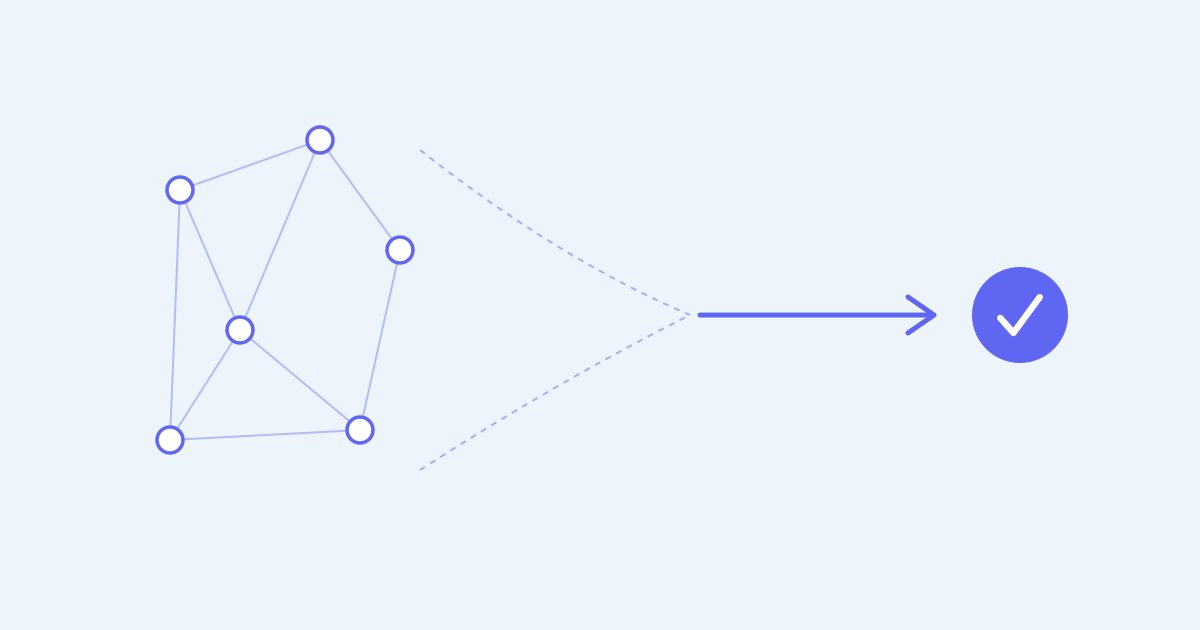
We often have to solve complex problems in our personal and professional lives. Not every complex problem is a wicked problem with no real answer, but most of them are still too big to hold in your head all at once. The method below is a simple way of breaking a complex problem down so you can actually make progress on it.
Start with the question
The first step is writing down what the question is. In Concept Mapper, that question will form the start of your concept map. Getting the question itself right matters more than people expect: 'what should we cook for a dinner party?' and 'how do we make sure everyone has a nice evening?' will send you looking at different sub-questions, even though they sound similar.
Break it into sub-questions
A question usually consists of sub questions. For example, to take a very simple example, if we have the question what should we cook for a dinner party? The sub questions are things like:
- Who is coming?
- Does anybody have any allergies?
- What do we have in the cupboard?
- What food is near its use-by-date?
- What do people enjoy eating?
The same approach works for problems with higher stakes. Picking a project management tool for your team might break down into: what do we actually need it to do, who's going to use it day to day, what's it going to cost, and how painful is it to switch away from later if we get it wrong? Breaking a big question into smaller ones like this is often called the Five Whys when you're digging into causes specifically, but the same idea applies to any complex question, not just 'why did this happen'.
Answer them one at a time
Now we've added these sub questions to our concept map, we can start answering them one by one. For each answer, we weigh up the pros and cons of each. We might also want to add links to resources, like recipe websites, or product comparison pages if it's a work decision.
Answering sub-questions individually also means you can make progress in whatever order suits you. If you already know who's coming and what they like, answer those first. The sub-questions you're unsure about can wait, and you don't need every answer before you can start seeing the shape of a solution.
See the whole picture
Being able to visualise the problem like this makes it easier to tackle. Once we have answered each sub question, we can then answer the main question. Because everything's laid out on one canvas rather than scattered across notes or messages, it's much easier to notice when two sub-questions actually depend on each other, or when an answer to one changes what a good answer looks like for another.
Bring other people in
To help even further, we can get people to help us. As we've visualised the problem, it's easy to explain to other people, and they can help us come up with a solution. Showing someone a map of your thinking, rather than just your conclusion, also makes it much easier for them to spot something you missed, or disagree with a specific part of your reasoning instead of the whole decision.
This problem solving method is simple, but very effective, whether the problem is picking a menu or something with real consequences on the line.